Why Your Best Writing Only Happens After 10 PM — And What That Says About Your Workday
Why Your Best Writing Happens After 10 PM — And What That Says About Your Workday
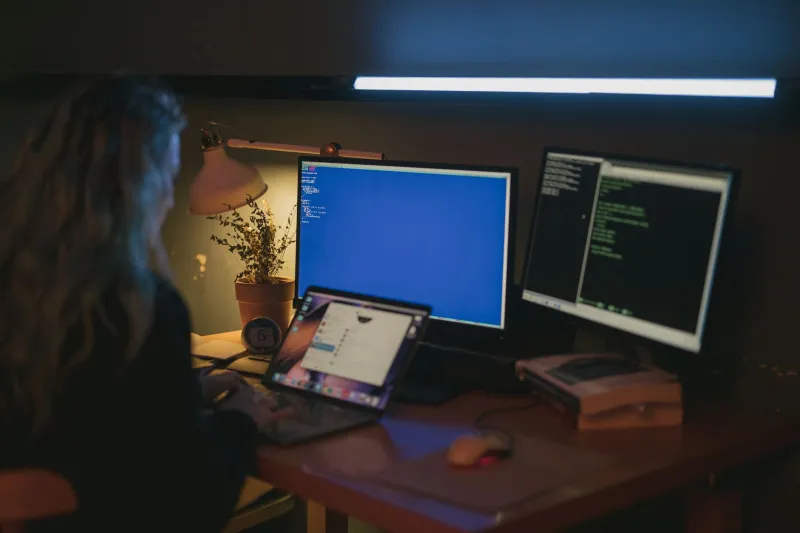
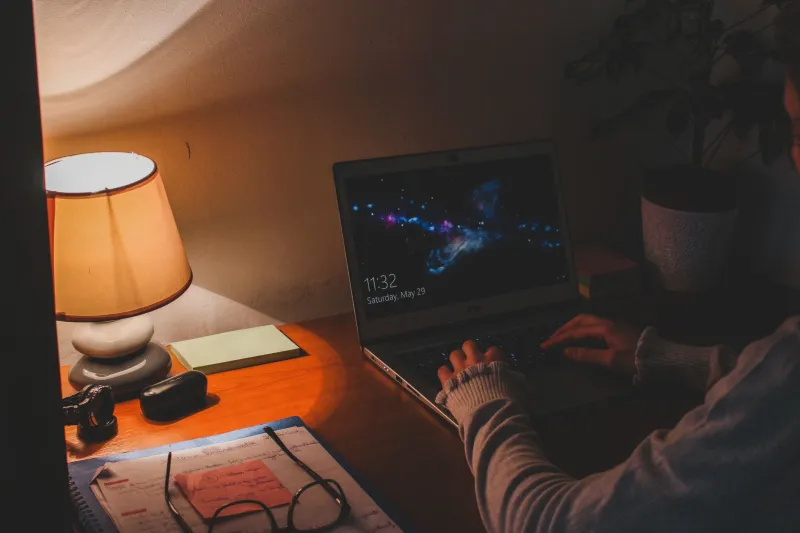
Check your document history sometime. Not for the content — just the timestamps. If you're like most knowledge workers in the US, you'll notice something a little uncomfortable: a lot of your best, most substantive writing happened somewhere between 9 PM and midnight, or maybe on a Saturday morning before the Slack notifications kicked in.
That's not a quirk of your personality. It's a signal that something in your workday is fundamentally broken.
The Workday Is Loud in Ways We've Stopped Noticing
We've normalized a workday that's essentially a series of interruptions with brief pauses in between. A ping here, a comment notification there, a "quick" meeting that bleeds into the next one. By the time you've cleared enough space to actually sit down and write something meaningful, it's 4:45 PM and your brain has already run several marathons.
Research on cognitive load consistently shows that context switching — jumping between tasks, apps, or conversations — doesn't just cost time. It costs mental energy in a way that's disproportionate to the actual switch itself. Psychologists call it "attention residue." When you close a Slack thread to open a Google Doc, part of your brain is still chewing on that conversation. You're never fully in the writing.
So you save the real writing for when the noise stops. Which, for a lot of people, means after hours.
Collaboration Tools Are Part of the Problem
Here's the uncomfortable irony: the tools designed to help your team work together are often the exact things making deep work impossible during business hours.
Shared documents with real-time editing can feel like someone's always looking over your shoulder. Comment threads create low-grade anxiety — you know a notification is coming, and some part of your brain is already preparing a response instead of focusing on the paragraph in front of you. Seeing a teammate's cursor blinking next to your half-finished sentence is, for many people, enough to break concentration entirely.
None of this is the tool's fault, exactly. Real-time collaboration is genuinely useful for certain kinds of work. But when it becomes the default mode for all writing — including the deep, focused kind — it turns shared documents into performance spaces rather than thinking spaces. And most people don't do their best thinking when they feel like they're being watched.
The Hidden Burnout Tax
When focused writing gets pushed to evenings and weekends, the work still gets done. On paper, that looks fine. But the cost is real and it compounds over time.
People who regularly do cognitively demanding work outside of work hours don't get the recovery time their brains actually need. The weeknight writing session that felt productive on Tuesday starts to feel like an obligation by Thursday. By the following month, the person who used to be your sharpest writer is producing careful, technically correct prose that somehow lacks all the energy it used to have. That's not a motivation problem. That's burnout wearing a productivity costume.
And here's the kicker: the organization often doesn't see it coming, because output looks normal right up until it doesn't.
What an Intentional Writing Environment Actually Looks Like
Reclaiming work hours for deep writing isn't about convincing everyone to stop collaborating. It's about being more deliberate about when and how collaboration happens.
A few things that actually move the needle:
Separating drafting from feedback. Writing and receiving comments are two different cognitive modes. When they happen simultaneously, neither works well. Building a workflow where drafting happens in a quieter space — before a document is shared for review — gives writers room to actually think. Platforms that let you control visibility at the document level make this a lot easier in practice.
Protecting blocks of uninterrupted time. This sounds obvious, but most teams never actually enforce it. A two-hour window with notifications off, calendar blocked, and no expectation of response is genuinely transformative for writing quality. The key is making it a team norm, not just a personal hack — because one person's focus block gets demolished the second a teammate decides to hop into their doc with a question.
Rethinking what "collaboration" means for writing. Collaboration doesn't have to mean simultaneous editing. Sharing a draft, giving someone time to read it fully, and then discussing it — whether async or in a short sync call — often produces better feedback than a pile of in-line comments that the author has to parse while also trying to revise. Written feedback on written work is still collaboration. It just respects the process a little more.
Centralizing where writing actually lives. A lot of context switching happens not because people are distracted, but because they genuinely can't find the right document, the right version, or the right conversation thread. When your writing is scattered across email attachments, three different shared drives, and a few personal folders, every session starts with a small scavenger hunt. That friction is invisible until you eliminate it — and then you realize how much mental energy it was quietly eating.
The Late-Night Edit Isn't a Badge of Honor
There's a version of this story where working at midnight is framed as dedication, hustle, doing what it takes. And sure, sometimes that's true. But when it's the norm rather than the exception — when the quiet hours are the only hours available for real thinking — that's not dedication. That's a system that's failed to protect the conditions people need to do their best work.
The good news is that this is fixable. Not with a new productivity framework or a motivational all-hands — but with small, structural changes to how your team shares, edits, and collaborates on written work. When the tools and workflows actually support focused writing during the day, people stop needing to find their focus at 11 PM.
And everyone's calendar — and everyone's sleep schedule — gets a little bit better for it.