Your Team Is Leaving Gold in the Margins — And Nobody's Going Back to Find It
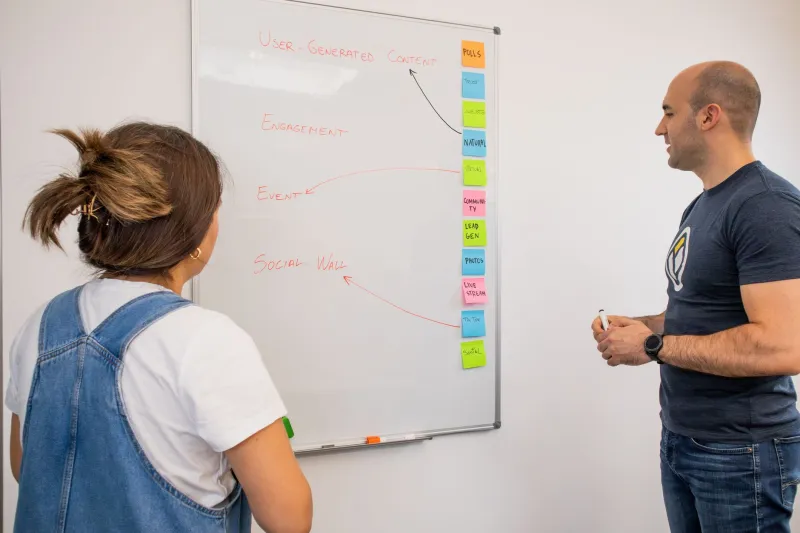
Think about the last time your team did a real review pass on a document. Maybe it was a strategy brief, a proposal, or a product spec. People showed up, left their thoughts — a suggestion here, a flag there, a "not sure about this" tucked into a thread — and then everyone moved on.
Now ask yourself: what actually happened to all those comments?
If you're being honest, most of them probably just... stayed there. Buried in a sidebar. Marked resolved or quietly ignored. The document got finalized, the project moved forward, and all that context — the reasoning, the hesitations, the alternative ideas — vanished into what might as well be a digital void.
This is the annotation graveyard. And your team is almost certainly building one right now.
Comments Aren't the Same as Decisions
There's a subtle but critical difference between capturing feedback and using it. Most document collaboration tools are really good at the first part. You can leave a comment, tag a colleague, start a thread, even use emoji reactions. The infrastructure for gathering input is genuinely impressive at this point.
The problem is what happens next — or more accurately, what doesn't happen next.
Feedback that lives in margins is inherently passive. It waits to be acted on. It doesn't push itself into a decision log or summarize itself into a clear next step. It just accumulates. And the more it accumulates, the less likely any individual comment is to actually influence the final product.
Teams fall into a rhythm where leaving a comment feels like contributing, and resolving a comment feels like progress. But neither of those things is the same as synthesizing feedback into a genuine decision. There's a gap between annotation and action, and most workflows quietly skip over it.
The Institutional Knowledge Problem
Here's where things get expensive. Beyond any single document, there's a long-term cost to letting feedback evaporate.
When a senior team member leaves a thoughtful note explaining why a certain approach won't work — based on something that happened two years ago, a client conversation, a hard lesson — that note carries real institutional knowledge. It's not just a stylistic preference. It's context that could save the next person from repeating the same mistake.
But if that comment gets resolved and archived without being synthesized into anything durable, it's gone. The next person who works on a similar document has no idea that reasoning ever existed. They might make the exact same call, hit the exact same wall, and have to learn the same lesson from scratch.
Multiply that across dozens of documents and dozens of team members over months and years, and you start to see the real cost. It's not just wasted feedback. It's wasted experience.
Why Teams Don't Go Back
So why doesn't anyone dig through the margins and pull the good stuff out? A few reasons, honestly.
First, the friction is real. Most document tools aren't built to make comment archaeology easy. You'd have to scroll through a long sidebar, piece together threaded conversations, and figure out which feedback was addressed and which was dismissed — and why. It's tedious work that nobody formally owns.
Second, there's no cultural prompt to do it. Teams are wired to move forward. Once a document is finalized, the instinct is to ship and get to the next thing. Going back to extract lessons from the review process feels like a luxury when there's always more work queued up.
Third — and this one's underrated — most people don't realize the feedback they left was actually valuable. A quick comment in the moment might not feel like institutional knowledge. It just feels like a note. The significance only becomes clear later, when that context is needed and no longer available.
What Better Looks Like
The fix isn't complicated, but it does require being intentional about how your team treats the review process.
Start by separating feedback collection from feedback synthesis. The comment phase is for gathering raw input — that part most teams already do fine. But build in a deliberate synthesis step where someone (it doesn't have to be a manager) is responsible for pulling the most important feedback into a decision log or a short summary before the document is finalized.
That summary doesn't need to be long. Even a few bullet points capturing the key decisions made, the alternatives that were considered, and the reasoning behind the final call can be enormously useful six months from now.
It also helps to change how you think about resolving comments. "Resolved" should mean "addressed and documented," not just "acknowledged and dismissed." If a piece of feedback changed the direction of the document, that should be traceable. If it was considered and rejected, the reason should be somewhere findable.
Some teams have started using a dedicated section at the top or bottom of shared documents — a "decision log" or "revision notes" block — where key feedback gets distilled before the final version is locked. It's a small habit that pays off fast.
The Platform Question
This is also worth asking of the tools your team uses: does your document collaboration platform treat comments as ephemeral, or as something worth preserving?
A lot of popular tools lean heavily toward the ephemeral model. Comments are there for the review process, and once that process is done, they're essentially archived out of sight. That works fine if your only goal is getting to a final draft. It works less well if you actually want to learn from your own review cycles.
Looking for a platform that gives feedback a more prominent, persistent role — where comments can be elevated into action items, threaded discussions can be summarized, and the review process leaves a usable trail — is worth the effort. The difference between a tool that captures feedback and one that helps you use it is bigger than it sounds.
Don't Let Good Thinking Disappear
Your team is smarter in the margins than you might realize. The notes people leave during a document review often reflect their sharpest, most honest thinking — unfiltered, specific, and grounded in real experience.
Letting that thinking disappear is a choice, even if it doesn't feel like one. It's a default that most teams fall into without ever deciding to.
The teams that pull ahead aren't necessarily the ones with the best ideas in the first place. They're often the ones that get better at holding onto the ideas they already have — and building on them instead of rediscovering them from scratch every few months.
Your margins are full of that kind of thinking. It's worth going back for it.